
Concrete Sleeper Retaining Walls Across Sydney
Durable steel-reinforced concrete sleepers set between galvanised posts - the workhorse wall for Sydney's sloping and split-level blocks.
Retaining Walls Sydney - Concrete Sleeper Retaining Walls
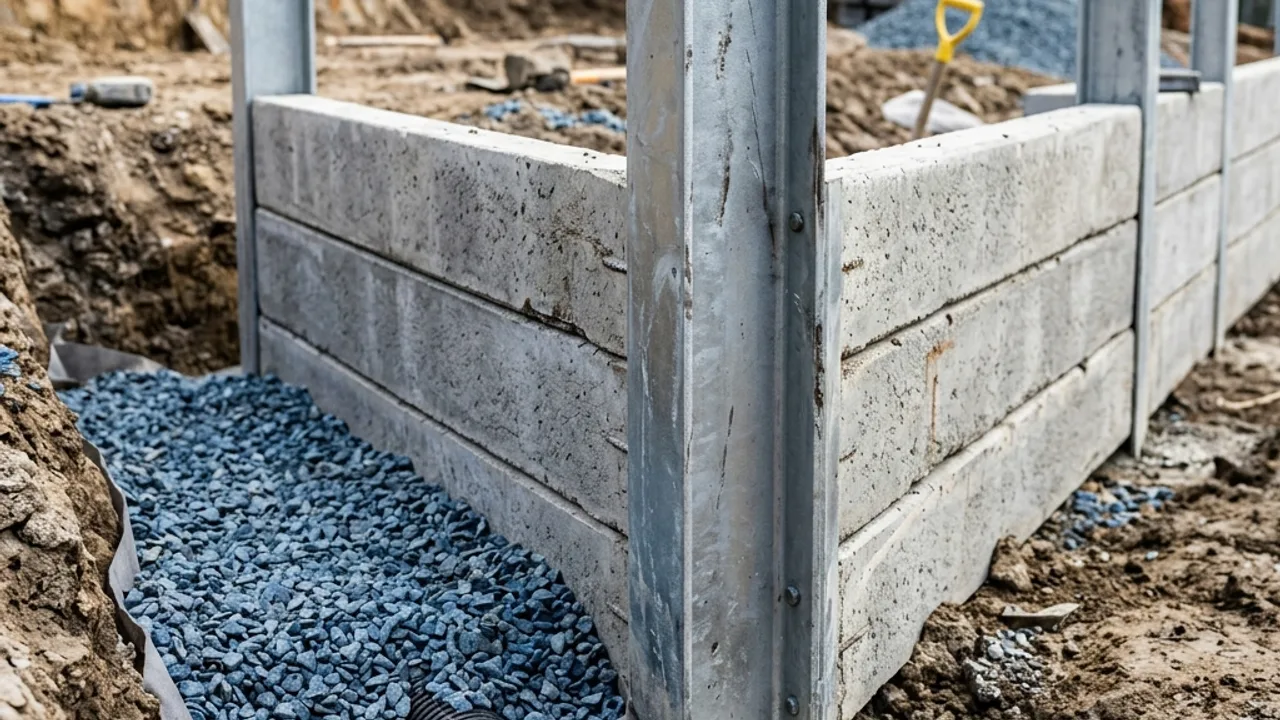
Concrete sleeper walls are the workhorse of Sydney retaining work - steel-reinforced concrete planks slotted between galvanised steel H-posts, built to carry real load without the maintenance timber needs. If your block sits on shale clay through the inner west or western suburbs, or you need a wall that will still be sound in thirty years, this is usually the first system a specialist in our network will talk you through. First contact starts with a few questions about your site: how much height you need to retain, whether the wall carries a surcharge like a driveway, and what access looks like for machinery.
What's Included
Steel posts set in concrete footings at engineered centres, sized to the retained height and any surcharge load.
Sleepers slotted between the posts course by course, with a batter built in where the wall calls for it.
Ag-drain pipe in free-draining gravel, geofabric-separated from the backfill, connected to the site stormwater system.
A clean capping course and finished face, ready for backfill and landscaping above.
Cost for a concrete sleeper wall in Sydney typically runs $550-$750+ per square metre of wall face (height times length), before GST, excavation, drainage and engineering. That is higher than timber sleeper up front, but the trade-off is durability: steel-reinforced concrete does not rot, does not attract termites, and handles the lateral pressure of shale-clay backfill far more predictably than timber over the long run. On a boundary wall or anywhere carrying real load, that difference matters more than the sticker price.
Sites with reactive clay - much of the inner west, Parramatta, Blacktown, Liverpool and Campbelltown sit on Wianamatta Group shale that weathers to clay-rich soil - put real pressure on a wall when it gets wet and swells. A concrete sleeper system with a properly engineered footing and real subsoil drainage is built to take that pressure without shifting. Skipping the drainage to save money is the single most common reason a concrete sleeper wall fails early, not a fault in the material itself.
If your wall is over 600mm or carries a surcharge such as a driveway or a structure above it, it falls outside NSW exempt development and needs either a Complying Development Certificate through a registered certifier or a Development Application through your council, with engineering design to AS 4678. Our network's specialists handle that process as part of the job rather than leaving you to work it out alone.
How It Works
Tell us your site, the height you need to retain, and what the wall is for.
A specialist experienced in concrete sleeper systems reviews your site details and reaches out to discuss the job.
The specialist checks access, soil, drainage and whether the wall crosses the exempt-development threshold.
A written quote, then posts, sleepers, drainage and finishing in sequence.
Why Use Our Network for Concrete Sleeper Retaining Walls
Concrete sleeper systems handle the ground movement common on Sydney's shale-clay suburbs far better than timber.
Above the exempt-development threshold, our network's specialists design to AS 4678 and manage the CDC or DA pathway.
Every quote accounts for ag-drain and gravel behind the wall - the detail that actually stops failures.
Concrete Sleeper Retaining Walls - Frequently Asked Questions
How much does a retaining wall cost in Sydney?
How long do concrete sleeper and besser block retaining walls last?
What is the best type of retaining wall for clay soil in Sydney?
Concrete Sleeper Retaining Walls across Sydney
Pick your suburb for the local notes, or submit the form for a free review.
Talk to a specialist
Ready for Concrete Sleeper Retaining Walls?
Tell us about your block and we will help you take the next step.