
Retaining Walls Sydney Specialists Build
Most people arrive at this page having already decided on a material, usually because a neighbour used it or a photo looked right. That decision is nearly always made too early. Height, load and what the wall is holding back settle the question first, and only once those are known does the choice between sleepers, block, stone or basket become a genuine choice at all. This page is arranged around that order.
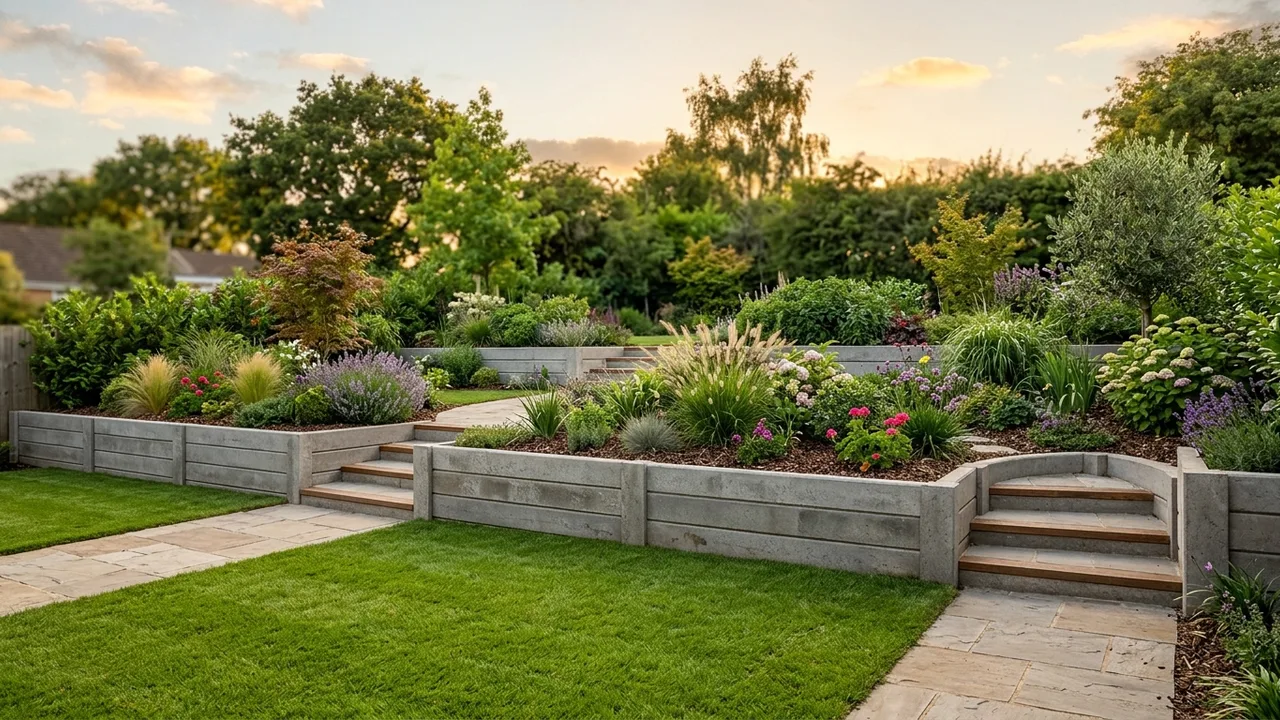
Retaining Walls Sydney - Which System Belongs on Your Job
Pick this one when the wall has to work rather than be admired - a boundary line, a driveway edge, a split-level yard on ground that swells and shrinks with the weather.
Pick this one for garden terracing that stays under the exempt height, on a tight budget, accepting a service life measured in decades rather than generations.
Pick this one when the finished face has to be rendered, painted or tiled, or when the height already forces an engineer into the job.
Pick this one on rock country where the stone matches the street and the excavator is coming out anyway.
Pick this one where water has to pass through the structure rather than around it - a creek bank, a scoured batter, a slope losing soil every storm.
Not a wall type at all, but the system sitting behind every one of them. Book it on its own when an existing wall is weeping, staining or bulging.
Not a preference above the exempt line, a requirement. Height, a surcharge overhead or a boundary position can each drag a job into certified territory.
Start here when a wall is leaning, cracking or shedding sleepers. Replacement is not always the cheaper answer, and it is not always avoidable either.
Four Questions Before the Material Question
How much fall are you taking out? Measure the vertical difference between where the ground is and where you want it, not the length of the run. That single number decides whether you are in exempt-development territory or heading for a certifier, and it also sets the price, because walls are quoted on face area - height multiplied by length - rather than by the metre.
What sits on top of it? A lawn is one thing. A driveway, a carport slab, a pool shell or a neighbour's fill is a surcharge, and a surcharge changes the structural brief completely regardless of how modest the height looks. Plenty of walls that would have been fine holding a garden bed are now leaning because somebody parked on them five years after they went in.
Can a machine reach the wall line? Sydney backyards are frequently gated, terraced or hemmed in by the house next door. When an excavator cannot get through, material is barrowed, spoil is bagged out, and a two-day job becomes a five-day one. That constraint alone often rules out the heavier stone options and steers a job toward a system that arrives in liftable pieces.
Who will look at it every day? A wall at the front of the property carries a streetscape obligation the back fence line does not. That is where rendered block or dressed stone earns its premium, and where a raw sleeper face is a false economy you will notice every time you pull into the driveway.
Where the Money Actually Goes
Homeowners comparing quotes usually compare the wall. The quotes usually differ somewhere else. Excavation is the first divergence: a trench cut through weathered shale is a different day's work to one cut into Hawkesbury Sandstone, and rock saw or hammer time is billed accordingly. Spoil removal is the second - what comes out of the ground has to go somewhere, and truck movements add up fast on a site with no room to stockpile.
Certification is the third. Structural design to AS 4678 plus a certifier's involvement is a real line item, and a quote that omits it on a wall that plainly needs it is not cheaper, it is incomplete. The fourth is drainage, and it is the one most often quietly trimmed to win a job. Aggregate, ag-line, geofabric and a connection to stormwater are a small fraction of the build cost and the single largest determinant of whether the wall is still straight in fifteen years.
When you ask for a written quote, ask for those four things itemised. A specialist who has actually priced the job can separate them without hesitation. One who cannot has estimated the wall and hoped about the rest.
Where the Approval Line Sits in NSW
The threshold that matters most in New South Wales is 600mm. Under the Codes SEPP, a retaining wall at or under that height can be exempt development, meaning no development application and no complying development certificate - but only if it also satisfies every other standard in the clause. The ones that trip people up are the setback of at least 1 metre from the property boundary, the requirement for 2 metres of separation from any other retaining wall, connection of drainage to an approved system, and the exclusions that apply to heritage items and land near waterbodies.
Miss any one of those and the wall is not exempt, whatever its height. From there the path is a complying development certificate through a registered certifier, or a development application to the council, and either way a structural engineer designs the wall to AS 4678 first. Building it and asking afterwards is the expensive order to do this in, particularly on a boundary where the neighbour has standing to complain.
Separately from planning, the contractor side has its own line: residential building work in New South Wales valued above $5,000 in labour and materials must be carried out under a contractor licence, and NSW Fair Trading publishes the licence check. Asking to see the licence number before a deposit changes hands takes a minute and is the cheapest due diligence available on the whole project.
Find a Service in Your Suburb
The same eight systems are available everywhere we operate, but the sensible default changes with the ground. Pick your suburb to see what the local geology and access usually push a job toward.