
Retaining Wall Checklist for Sydney Homeowners
Retaining Walls Sydney - Planning Checklist
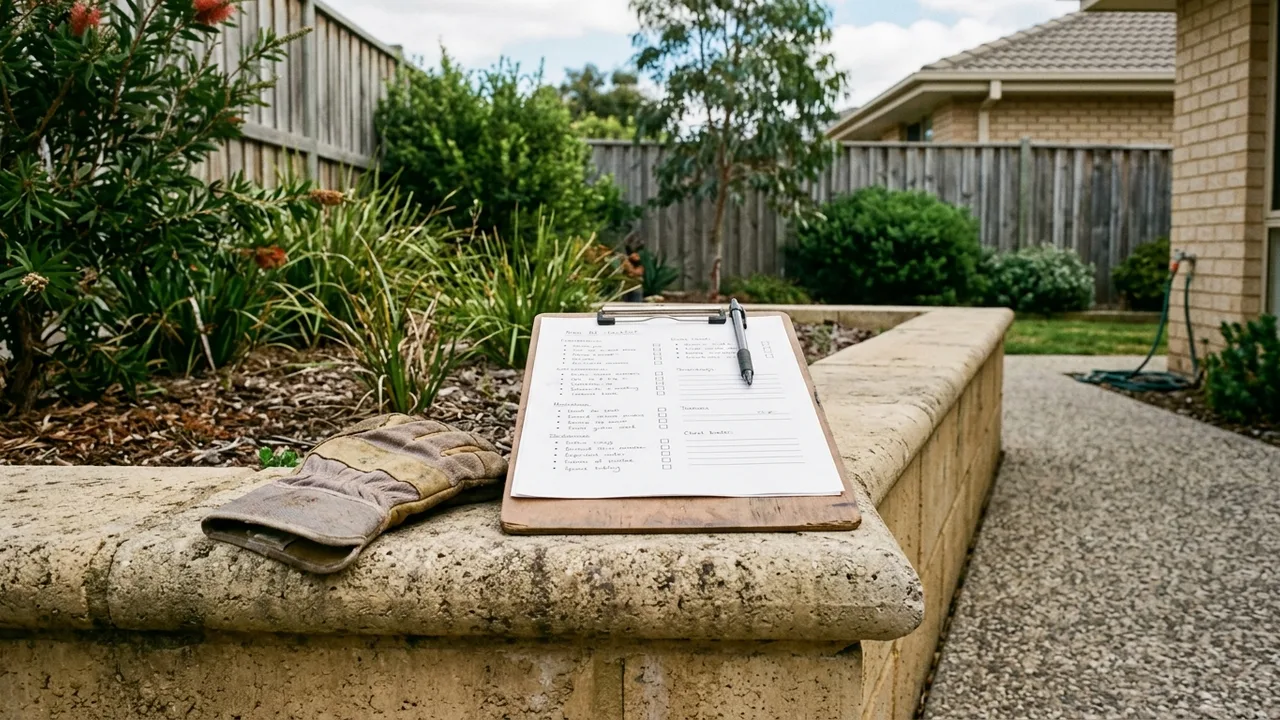
Fifteen things worth checking before you start getting quotes for a Sydney retaining wall - compliance, soil, drainage and licensing, each with why it actually matters. All fifteen are set out in full on this page, free, with nothing to download and no sign-up.
- 1 Measure the retained height accurately
The 600mm exempt-development threshold is measured vertically from the base to the top of the wall - getting this wrong is the most common reason a project's approval assumptions turn out incorrect.
- 2 Check the boundary setback
An exempt-development wall needs at least 1m clearance from every lot boundary - a wall built closer needs a different approval pathway from the start.
- 3 Check for any surcharge above the wall
A driveway, pool, deck or structure built above the wall adds load and can push it outside exempt development regardless of height.
- 4 Find out if your block has a heritage overlay
Heritage conservation areas are common across the inner west, eastern suburbs, lower north shore and Parramatta, and can require an extra approval step for a boundary wall.
- 5 Check for landslip or geotechnical hazard mapping
Northern Beaches, Ku-ring-gai, Hornsby, Sutherland Shire and the Blue Mountains fringe map slope-instability areas that can require a geotechnical report.
- 6 Check for tree preservation orders
Excavating inside a protected tree's root zone is its own approval in many leafy Sydney LGAs, separate from the wall approval itself.
- 7 Ask whether your soil type is sandstone, shale clay or sand
Sandstone means budgeting for rock excavation, shale clay means drainage is critical, and sandy ground needs different footing and shoring methods.
- 8 Confirm the site access for machinery
Narrow side passages, harbourside lots and battle-axe blocks often rule out standard machine access, which changes both the method and the price.
- 9 Ask what drainage system is included
Ag-drain pipe, gravel and geofabric behind the wall are what actually stop most retaining wall failures - a quote without a clear drainage line item is missing the most important detail.
- 10 Confirm the stormwater connection point
NSW exempt-development standards require drainage connected to the site's existing stormwater system, not simply directed onto a neighbour's property.
- 11 Ask if the contractor holds a structural landscaping licence
NSW requires a contractor licence for residential building work over $5,000 in labour and materials, in the structural landscaping category for retaining walls.
- 12 Ask about Home Building Compensation Fund cover
HBCF insurance is required for NSW residential work over $20,000 - ask for evidence of cover before paying a deposit on a larger job.
- 13 Get the engineering sorted before quoting a wall above the threshold
A wall outside the exempt-development standards needs AS 4678 design by a structural or geotechnical engineer as part of the CDC or DA pathway - this affects both cost and timeline.
- 14 Ask for a written, itemised quote
A single lump-sum figure hides what is and is not included - excavation, drainage, backfill and engineering should each be visible so quotes can be compared fairly.
- 15 Check what happens to the old wall if you are replacing one
Demolition, spoil removal and any temporary support for the excavation are real costs that a replacement quote should show separately from the new wall.
Method - How This Checklist Was Put Together
What this is, and is not: a practical planning checklist, not legal or engineering advice for your specific site - always confirm requirements with your council or a registered certifier.
Where the items come from: each item is drawn from the exempt-development standards, licensing thresholds and drainage practice set out by the NSW Planning Portal and NSW Fair Trading, plus common on-site conditions across Sydney's sandstone, shale-clay and sandy suburbs.