
Gabion Retaining Walls in Sydney

Gabion Retaining Walls Across Sydney

Rock-filled wire baskets that form a strong, free-draining wall well suited to sloping and erosion-prone sites.

Retaining Walls Sydney - Gabion Retaining Walls

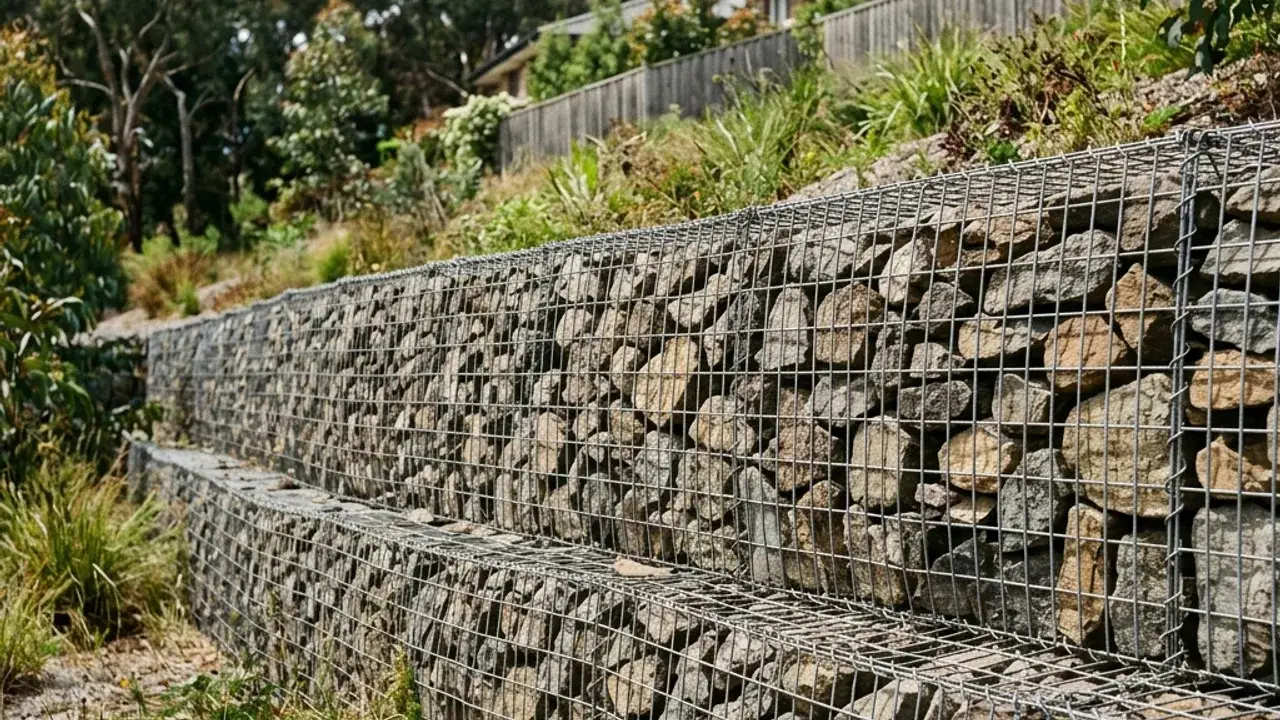
Gabion walls - rock-filled galvanised wire baskets - are the system to ask about on a steep or erosion-prone block where a free-draining, flexible wall does more good than a rigid one. They tolerate ground movement without cracking and suit larger sloping sites better than tight inner-city yards. First contact is about your slope, the erosion pattern you are seeing, and whether the site has room for the wall's footprint.

What's Included

Gabion basket supply and fill

Galvanised wire baskets filled with rock, stacked to form the wall.

Erosion control walls

Positioned and battered to manage surface water and stop soil loss on sloping ground.

Coastal-grade coating

Heavier galvanising or PVC coating specified for sites near the coast.

Free-draining base preparation

A stable, well-drained base course so the wall does not settle unevenly.

Gabion walls typically cost $250-$450+ per square metre installed, sitting in the middle of the material range - more than timber, generally less than sandstone or besser block. The bulk of that cost is the rock fill and the labour to stack it properly rather than the wire basket itself, so the price scales fairly predictably with wall size.

The genuine advantage of a gabion wall is drainage: water moves freely through the rock fill rather than building up hydrostatic pressure behind a solid face, which is exactly the failure mode that damages rigid walls on poorly drained sites. That makes gabion a strong option on genuinely erosion-prone or steep bushland-fringe blocks - the Hornsby plateau gullies and similar terrain - where surface water is a real design factor.

The trade-off is footprint: a gabion wall needs real depth to stand safely at height, which rules it out on narrow inner-city boundary lines where a besser block or concrete sleeper wall can achieve the same retained height in a fraction of the space. That gets assessed upfront rather than letting you commit to a system your block cannot fit.

How It Works

1 Get in Touch

Tell us about your slope and what erosion or drainage problem you are seeing.

2 Specialist Review

A specialist who builds gabion systems reviews your details and reaches out.

3 Site assessment

Checking whether gabion genuinely suits the site, footprint and access.

4 Build

Baskets set, filled and stacked, base and drainage prepared first.

Why Use Our Network for Gabion Retaining Walls

Free-Draining by Design

Gabion walls do not trap water the way a solid-face wall can if drainage is skipped.

Handles Ground Movement

The rock-filled basket structure tolerates settling and movement without cracking.

Honest About Fit

We will say plainly when your block is too tight for a gabion wall's footprint.

Gabion Retaining Walls - Frequently Asked Questions

Are gabion retaining walls good for Sydney conditions?
Gabion (rock-filled wire basket) walls drain freely by design, which suits sloping or erosion-prone sites, and they tolerate some ground movement without cracking the way a rigid wall can. They are less common as a boundary wall in tighter suburban blocks simply because of the footprint they need.
Are retaining walls covered by home insurance if they fail?
Many standard home insurance policies in Australia either exclude retaining walls or only cover them for specific events, such as impact damage, rather than gradual movement or poor construction. Damage from soil creep, subsidence or inadequate drainage is often not covered. Some insurers offer optional cover or have strict conditions about engineering and maintenance. It is important to read your policy carefully and ask your insurer directly about retaining walls.
Is timber or concrete better for a retaining wall in Sydney?
Timber retaining walls are typically cheaper upfront and suit lower garden walls, but they can have a shorter lifespan, especially in damp or termite‑prone areas. Concrete sleeper or block walls cost more initially but are usually stronger, last longer, and are better for taller or structural applications. In Sydney’s climate and clay soils, many owners choose concrete for boundary walls and higher loads, and timber for smaller landscaping features. The best choice depends on your budget, desired look, and whether engineering certification is needed.

Gabion Retaining Walls across Sydney

Pick your suburb for the local notes, or submit the form for a free review.

Mosman Shallow soil over harbour sandstone, so walls here are cut and battered into rock, not backfilled. Chatswood Ridge-top cut-and-fill blocks where driveway surcharge decides whether the old sleeper wall stays. Turramurra Leafy plateau blocks where digging inside a protected tree's root zone needs council sign-off first. Hornsby Plateau-and-gully land near mapped landslip country, where a geotechnical report gets asked for early. Manly Narrow peninsula lots where getting material to the back yard costs more than the wall itself. Randwick Sandstone close to the surface on tight terrace lots, so rock excavation and setbacks come up early. Ashfield Shale clay behind ageing sleeper walls, the classic setup for a lean where drainage was never put in. Leichhardt Low boundary walls between narrow terrace yards, where the 1 m setback bites before the height does. Burwood Shale-derived clay where the ag-line behind the wall is doing structural work, not ticking a box. Parramatta River flats meeting shale ridge, with heritage overlays adding a check near anything listed. Blacktown Flat-to-gentle shale plain blocks, where boundary and driveway cuts still need real subsoil drainage. Penrith Nepean floodplain and overland-flow controls that council reads before the exempt test even applies. Liverpool Georges River corridor clay, split between infill new builds and end-of-life sleeper wall repairs. Campbelltown Cut-and-fill house pads where surcharge from a driveway pushes a wall past the exempt threshold. Botany Loose coastal sand and shallow groundwater, so holding the excavation open drives the build method. Kogarah Sandy bayside ground where free-draining backfill and a connected stormwater line matter most.

See all locations ->

Talk to a specialist

Ready for Gabion Retaining Walls?

Tell us about your block and we will help you take the next step.