
Retaining Wall Drainage & Subsoil Systems Across Sydney
Ag-drain, gravel and geofabric drainage behind every wall, connected to the site stormwater system - the drainage the Codes SEPP makes a condition of approval and the detail that stops most wall failures.
Retaining Walls Sydney - Retaining Wall Drainage & Subsoil Systems
Drainage is the detail that decides whether a retaining wall lasts or fails, and it is the genuine expertise signal in this category - not an afterthought bolted onto the end of a quote. Whether you are planning a new wall or trying to work out why an existing one is leaning or bulging, getting the ag-drain, gravel and stormwater connection right is the single biggest factor in the outcome. This is also a Codes SEPP condition of the exempt-development pathway itself, so it is not optional even on a small wall.
What's Included
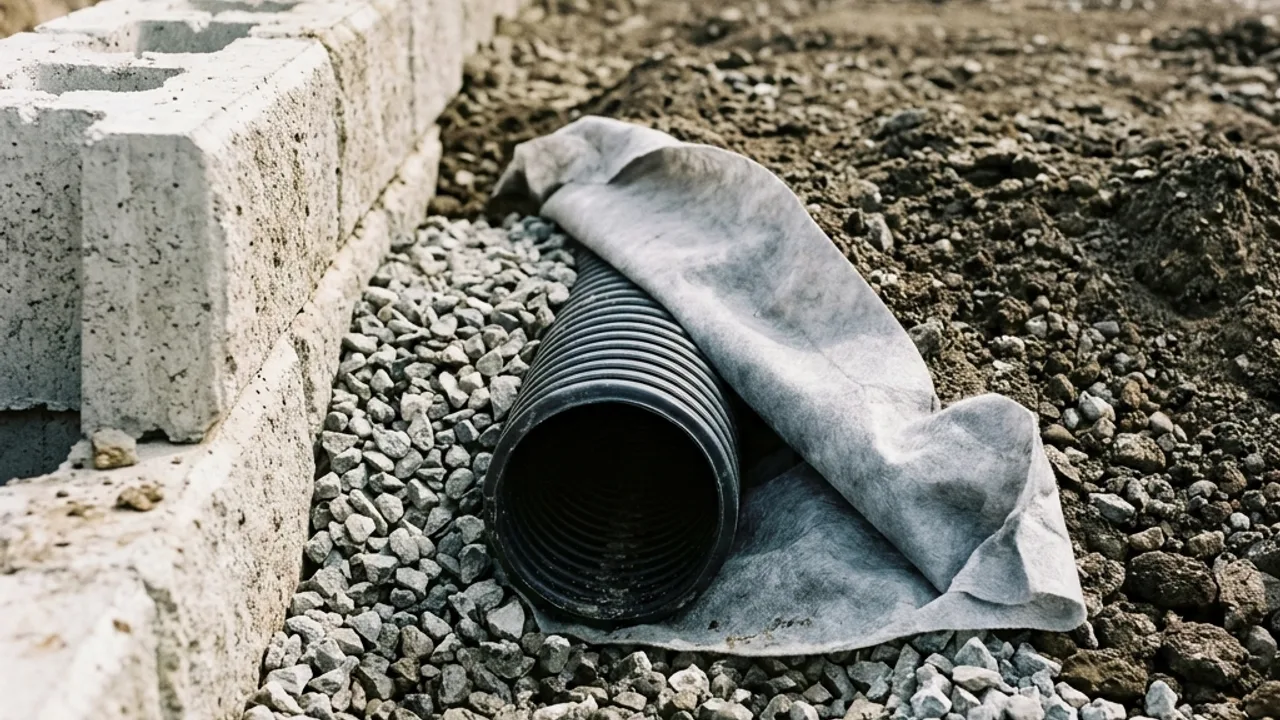
Perforated ag-drain pipe set in free-draining gravel behind the wall base.
Geofabric separating the gravel from the clay backfill so the drain does not clog over time.
A positive connection into the site's approved stormwater system, as the Codes SEPP requires.
Correcting missing or failed drainage behind a wall that is already built.
Hydrostatic pressure - water trapped behind a wall with nowhere to go - is the most common cause of retaining wall failure in Sydney, more common than any single material defect. A wall backfilled with clay and no ag-drain will hold water against the face every time it rains, and that pressure eventually pushes the wall forward, bulges the face, or works posts loose at the base. The fix is not complicated, but it has to be done at build time or retrofitted properly - it cannot be added as an afterthought once the backfill is in.
The standard detail is a perforated agricultural drainage pipe running along the base of the wall, bedded in free-draining gravel, with geotextile fabric wrapping the gravel so fine clay particles cannot migrate in and clog the drain over time. That drain then needs a real, working connection into the site's approved stormwater system - not simply daylighting onto a neighbour's property, which the Codes SEPP explicitly prohibits for an exempt-development wall.
If you already have a wall showing signs of water pressure - persistent damp patches on the face, a wall that visibly moves after heavy rain, or standing water pooling at the base - a drainage retrofit is often a genuine alternative to a full rebuild. It usually involves excavating a trench along the base of the wall to install the missing ag-drain and gravel without disturbing the wall structure itself, and it is worth assessing before assuming the whole wall needs replacing.
How It Works
Tell us whether this is for a new wall or a drainage problem on an existing one.
A specialist who treats drainage as structural, not landscaping, reviews your details and gets in touch.
Checking the existing drainage (or lack of it) and what the fix genuinely requires.
Ag-drain, geofabric and stormwater connection installed or corrected.
Why Use Our Network for Retaining Wall Drainage & Subsoil Systems
Most wall failures trace back to trapped water, not a fault in the wall material.
Even an exempt-development wall must have drainage connected to the site stormwater system.
We help with existing walls where drainage was never installed properly, not only new jobs.
Retaining Wall Drainage & Subsoil Systems - Frequently Asked Questions
How much does a timber sleeper retaining wall cost in Sydney?
At what height does a retaining wall need engineering in NSW?
How long do concrete sleeper and besser block retaining walls last?
Retaining Wall Drainage & Subsoil Systems across Sydney
Pick your suburb for the local notes, or submit the form for a free review.
Talk to a specialist
Ready for Retaining Wall Drainage & Subsoil Systems?
Tell us about your block and we will help you take the next step.